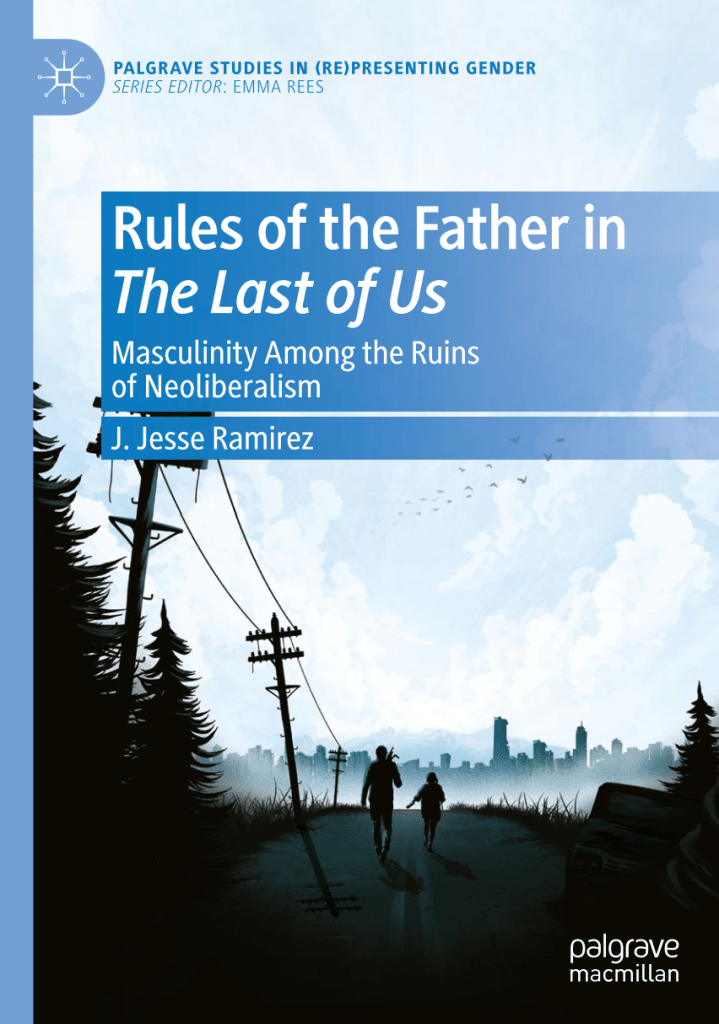
How is patriarchy, the rule of the father, encoded in rule-based systems like videogames? How does patriarchal rule become an algorithmic rule and vice-versa? These questions are at the heart of this book, the first comprehensive scholarly analysis of the zombie apocalypse/ action-adventure/ third-person shooter videogame The Last of Us (2013). On the one hand, the book is a close, extended study of The Last of Us and its themes, genres, procedures, and gameplay. On the other hand, the book is a post-GamerGate reflection on the political and ethical possibilities of progressive play in algorithmic mass culture.
View the book on the publisher’s website here. Listen to the Games Studies Study Buddies roundtable on The Last of Us game and TV show here.
In this ‘critical playthrough’ of The Last of Us, Ramirez thinks the game’s various tropes and processes through the ‘metagame’ of hegemonic masculinity and neoliberal individualism, producing a superb close reading of how the game’s possibility space maps onto contemporary debates about whiteness, violence, and neoliberalism.
Prof. Gerald Voorhees, University of Waterloo, Canada
 Jesse Ramírez
Leave a comment